Art is a way of life.
Showing posts with label Seminar Tasks. Show all posts

Wednesday, 16 November 2011

Seminar - Weegee Presentation


        The City: Arthur “WeegeeFellig


For this presentation, was asked to research Weegee's photographs - as it relates to the city and it documents the effect of the city upon the lives of its inhabitants.


Corpse with revolver


Children on the fire-escape


What is represented and communicated in the photographer’s work?
Weegee documents street life and crime. Most is in New York of the Lower East Side. During his career, the Lower East Side was a working class part of New York; not as established as other areas. This allowed him to find the crime he documented; also aided by The Great Depression in the 1930s.


He often takes photographs in the night while following the various emergency services thanks to the police radio he kept in his car. This meant he arrived at the scene of murders, violence and crime, car accidents and crashes and chaotic events but also allowed him to develop his style. The time of day he took his images relates very well to the dark things he photographs as well as it generally being the time so much of the crime occurred. He mostly always used flash.


There are always people and figures in his photos and/or events going on. In some there are groups of people and in others there is only one who he may have found an interesting subject such as a thief he photographed in a police station who was dressed as a woman. Photographing such a wide range of people suggests Weegee is suggesting the diversity of humanity in his work.

How has the photographer chosen to portray his story?
Weegee takes an objective approach to his work; viewing it from an outside perspective. This is a good way of telling the viewer the story because while he is looking at the scenes from a certain distance, we are too. However, he also appears to be in the middle of the scene in the sense that he often gets close to his subjects. This allows us to get closer too and understand more of what’s going on. He chooses to take his photographs at the eye level of the people (unless asleep or preoccupied) which makes these people more relatable.
His angles sometimes dictate the social hierarchy. For example, in his image of a murder victim, his angle is low, looking upwards at the people surrounding the body suggesting their superiority.

What are the visual elements and photographic choices of the work?
As we’ve already established Weegee practically always includes people in his images which are the subjects of his work. The main subject is always completely framed but there are other less significant figures sometimes included in the frame although not fully. He gives the viewer an idea of the setting of the photo but not a clear one. The focus is on the people not generally the location.
The composition of Weegee’s photos is always different to suit the scene. He doesn’t seem to consider the compositions all the time but concentrates more on what’s happening and including the people sufficiently in his image. Like his compositions, his camera angles are ever changing to suit the scenes too.§ 
He used a Speed Graphic 5x4 camera which he often kept set on 10ft and f16 with a flash bulb. Weegee always shot in black and white and increased the contrast of his images. This emphasis the scenes and makes the images more effective.

How is the city present in the images?
Weegee involves things in his photographs for the viewer to see what kind of environment it is or when the photos was taken and they also provide context. For example, his photo “Happy New Year involves a banner which tells us obviously when he took the photo. There’s a sense of mystery in the photo because the people in it look relatively happy but we still don’t know what has happened and whether or not it contradicts the banner.


Weegee’s photograph “On the Spot” clearly shows a murder outside of a Bar and Grill and the sign post shows the exact location. The image looks strange because of the location to begin with and how the police officers seem to be casually standing around near a dead body that nobody really seems to be that aware of.


What do the images say about the existence in the city and what psychological effect does it have on the citizens?

Weegee’s photograph’s display the relationship of the people to the environment. The environment is constant in comparison to the people. The viewer doesn’t see the growth of the buildings and architecture etc. but you see the events of the characters in the photos and what happens to the people every day.

The Great Depression had a very negative effect on the state of the city; not just economically. The aesthetics of the city changed – the new buildings no longer looked glamorous. The city was now run down and dirty. The rate of crime in New York probably had something to do with this. Certainly this is what Weegee’s photographs appear to portray. 


Monday, 24 October 2011

Seminar on Florian Maier-Aichen


Today I was asked to analyse Aichen's Landscape image - Inferred Landscape 


Initial Impressions

- High saturation
- Bold+ striking colours = blue+red = Toxic!
- Good contrast between the two shades
- definitely has been altered - photoshop - shadow tool
- Taken from high view point - across landscape
- Instantly think of lava and roses when I see the red landscape


Research - video on youtube - Aichen describing the image 

- His work addresses issues of globalisation and virtual perception
- view of luxury homes
- he uses a combination of traditional photographic techniques and computer imaging
- good combination of american west and los angeles industrialises landscape.

Aichen is not interested in natural landscape because theres nothing going on, so he has used inferred film to make it look science fictional

- His perception of Beauty - the red represents fear
- Aichens made it unique - By his mistakes.  

Wednesday, 12 October 2011

Between Frontier and the Back-Garden Deconstructing Environmental Photographers

Simon Norfolk 

Simon Norfolk was born in Lagos, Nigeria, in 1963 and educated in England, finishing at Oxford and Bristol Universities with a degree in philosophy and sociology.

After leaving a documentary photography course in Newport, South Wales, Norfolk worked for far-left publications specializing in work on anti-racist activities and fascist groups, in particular the British National Party. In 1994 he gave up photojournalism in favor of landscape photography.
Simon Norfolk went in Afghanistan for the first time in 2001, when the US began to bomb the country as the prelude to the so-called Operation Enduring Freedom. He came back with the series Afghanistan: Chronotopia: Landscapes of the Destruction of Afghanistan. A few years later, someone from the National Media Museum in Bradford showed him pictures by the nineteenth-century British photographer John Burke. Burke, who is thought to be the first man ever to have photographed Afghanistan, accompanied the British forces during the invasion that became theSecond Anglo-Afghan War of 1878-80. Burke's splendid sepia photos gave Norfolk the desire to follow the footsteps of the Victorian photographer.


In October 2010, Norfolk flew back to Afghanistan to shoot a new series that respond to Burke's Afghan war scenes in the context of the contemporary conflict.  He hopes that his photos will communicate his disappointment at the situation in Afghanistan where thousands of people have already died. Norfolk sees the war as a murderous manifestation of imperialism.

I've chosen six images which stood out to me out of the series and will give my opinion and thoughts of them.
The old station for Jalalabad-Kabul buses


The swimming pool of the destroyed preseidental palace at Darulaman


Former tree house in a park next to the afghan exhibition of economic+social achievements in Shah Shahid  district of Kabul. Balloons were illegal under the Taliban but now balloon-sellers are common on the streets of Kabul providing cheap treats for children.


The district of Afshar in western Kabul, this Hazara neighbourhood was completely devastated during the ethnic fighting between the residents+Rabbani forces in the early 1990's. 


Controlled destruction by Halo Trust of US Cluster bombs dropped in error on the civilian village and orchads of Aqa Ali-Khuja on the Shomali plain north of Kabul 


Bullet -scarred outdoor cinema at the place of culture in the Korte Char district of Kabul


Old big plane on a display plinth at the exhibition grounds in Kabul. Fighting birds are a source of great pride to Afghan men but were banned by the Taliban as un-islamic. 

Wednesday, 5 October 2011

Environmental - Deconstructing Images

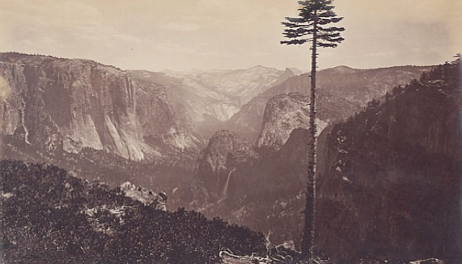
In todays seminar  my group and I were told to look at Paul Cezanne's image - 'Great Pine near Aix' 1890-1895 and Carleton Watkins image 'Best General View Yosemite Valley 1867
'‘I want to make of impressionism something solid and lasting like the art in the museums’. - Cezanne
  • - This image relates to Cezanne's feelings in his youth when he wrote a letter Emilie Zola (best friend) 

    *‘’Do you remember the pine on the bank of the arc (river) with it’s hairy head projecting above the abyss at its foot? This pine which protected our bodies with its foliage from the heat of the sun oh! May the gods preserve it from the woodman's baleful axe!
  1. What is represented and communicated in the images?
In each image there is a long tree. In Paul Cezanne’s painting, the tree dominates the image; it’s branches splayed out reaching the edges of the painting. This perhaps suggests the trees power and how it has a great affect over things – maybe nature particularly. Through this quality connotations can be created towards the tree of knowledge and the tree of life.


Carleton Watkins’ photograph is very different visually. The similarities the images hold of this single tree is portrayed in a very contrasting way in this photograph compared to the painting. The tree stands tall and alone as if it’s embracing it’s solidarity. The tree could be a symbol for pride and independence as it looks just that. It also seems superior in it’s height and general appearance in the scene.
In Cezanne’s painting the trunk and branches are framed by leaves and foliage. This draws attention to the trunk and branches raising it’s status of importance. The leaves would not exist if it was not for these elements of nature. This gives the tree Cezanne has painted meaning, purpose and importance.
In comparison to the painting, Watkins’ photograph is much more open. The tree stands out, not framed by anything particularly. It is more distinguishable as it is backed by pail sky and it’s height contributes to this. Whereas Cezanne’s painting of the tree is much more blended and almost hidden.
So Cezanne’s painting and Watkins’ photograph have one main thing in common but many differences overall.

2. Are the images related to a particular Ideology?

•Paul Cezanne’s work was influential to cubism, an art form from the period of post impressionism. His ideas were to be expressive and create feelings of emotion within his audience.
•Carleton Watkins’ work was based on his desire to capture beauty and preserve nature, this work was used in US congress for the preservation of Yosemite Valley as a national park.

3What is the photographer/ painters visual choices?
•The photograph is taken horizontally facing straight into the valley.
•It is a overall sharp image, and the photographer has used a small aperture. The main focus in Watkins photograph is on the cliffs in the middle.
•The light is coming from the front left. You get the impression that he has used the same technique as Ansel Adams, the zone system, and used spot metering to measure the light. The cliffs in the middle are correctly lighted and are the main focus points together with the pine in the foreground. The foreground is pretty dark and the background almost blends in with the sky, so the tree really stands out.
•It’s hard to measure the distance in the picture because one don’t know how tall the pine in the foreground is. The tree could be about thirty meters away and the mountains in the back many kilometers away. 
•The main focus in Cezanne's painting is pine. because it takes up almost the whole canvas. You can also see a bit of the background because it is lighter.
•The painting is pretty dark in the foreground and you get the feeling of that you're sitting in the dark forest peeking out on the fields.
•The lightning and the colors are pretty realistic.  

4. Can you asses the images through reference of process and technique?

•Paul Sezanne – post-impressionist painter who used the early 20th century’s new line of artistic enquiry, Cubism. His work demonstrates a mastery of design, color, tone, composition and draughtsmanship. His  often repetitive, sensitive and exploratory brushstrokes are highly characteristic and clearly recognizable. 

•Carleton Watkins was a technical virtuoso and an artist able simplify an enhance landscape to the point at which it begins to read an symbol. He experimented with several new photographic techniques: “Mammoth camera” which used 18x22 inch glass plate negatives and stereographic camera. The grandiose scale and intimate detail of his resulting prints made his reputation.

5. How was the photographer chosen to portray his story

  
    •        The tree stands alone and with the quote from Paul Cezanne of ‘isolation is what I am worthy of’ I think he could be referencing this, this seems to be done by drawing the focus into the tree, the use of heavy brush strokes on the outer edge of the painting and smooth strokes on the tree its self draws the eye in. 


    • The use of tones in this photo tells a story of the landscape being vast and untamed, how in the foreground near the tree is fairly high contrast of black and white but gradually down the valley becomes grey until almost the same as the sky. This draws the eye from the prominence of the tree and takes the viewers eye all over the huge untouched west. 

    Comparisons – Both seem to reference same notion of being alone. The use the tree as a symbol of standing alone, Cezanne in the way of isolation and Watkins as a contrast to the huge wild landscape of the valley.

    *Visual elements - •Watkins – the use of tree places us as the viewers at the forefront of the image, which then dwarfs us as the landscape then becomes more intense. The viewer the scale of becomes more exaggerated as the tree doesn't fit in the shot .
    Cezanne – The use of heavy brush stroke bring the focal point into the tree trunk, coming from the edge down the branches to the center of the tree.


    Monday, 3 October 2011

    Deconstructing Framework

    In todays seminar I was given a task to analyse an image by Photojournalist Dorothea Lange called 'Migrant Mother' (Florence Owens Thompson) whom was Photographed during the great depression in 1936.

    Going deep into the analysis and meaning of this image, I came to the conclusion that her gaze portrays she's in deep thought and due to her posture and body language its more hard hitting as she is not distraught. 
    The fact the image is in black+white gives a sense that theres 'no colour in their lives' (Mother and children's) 

    Wednesday, 28 September 2011

    The Picturesque Period and Timing of English Landscape

    Today I looked at an image called 'Falls of the Llugwy at Pont Y Pair - 1857 by Roger Fenton
    And analysed what is represented and communicated in the Photograph.
    In autumn 1857, Fenton traveled to the small village of Bettws-y-Coed, in North Wales. Nearby Fenton found the subjects of some of his finest landscape photographs. 
    "I passed over [the Pont-y-Pair] to the opposite bank … and took my station upon one of the rocky projections looking up the river. It was some time since any rain had fallen, and the stream was comparatively shallow, exposing the rude masses of granite that stood midway in the channel, and laying bare to their foundations the broad deep chasms which the rushing waters had formed in their headlong descent." 


    Fenton wanted to represent a description of the place written in Thomas Roscoe's guidebook - Wandering + Excursions in North Wales 1853. He stood at the same place where the description was written in order to get the same viewpoint. - Dynamic Structure

    Visual Elements - Composition; Water centred on the photograph surrounded by the rocks trees almost fills the top third of the image ; cut it off to draw more attention to the falls.

    Visual Choices;
    - Focusses on falls and surroundings of rocks
    - Close distance
    -Natural Lighting - Location mid-day
    - F16 - 6 Second exposure (approx)
    - Tripod backed up against wall by footpath - level with the top of the rocks.